Is Sterile Processing Technician a Good Job? Pros and Cons (2026)
See if you qualify for Sterile Processing Technician programs
Answer a few questions in 2 minutes. Free, no commitment.
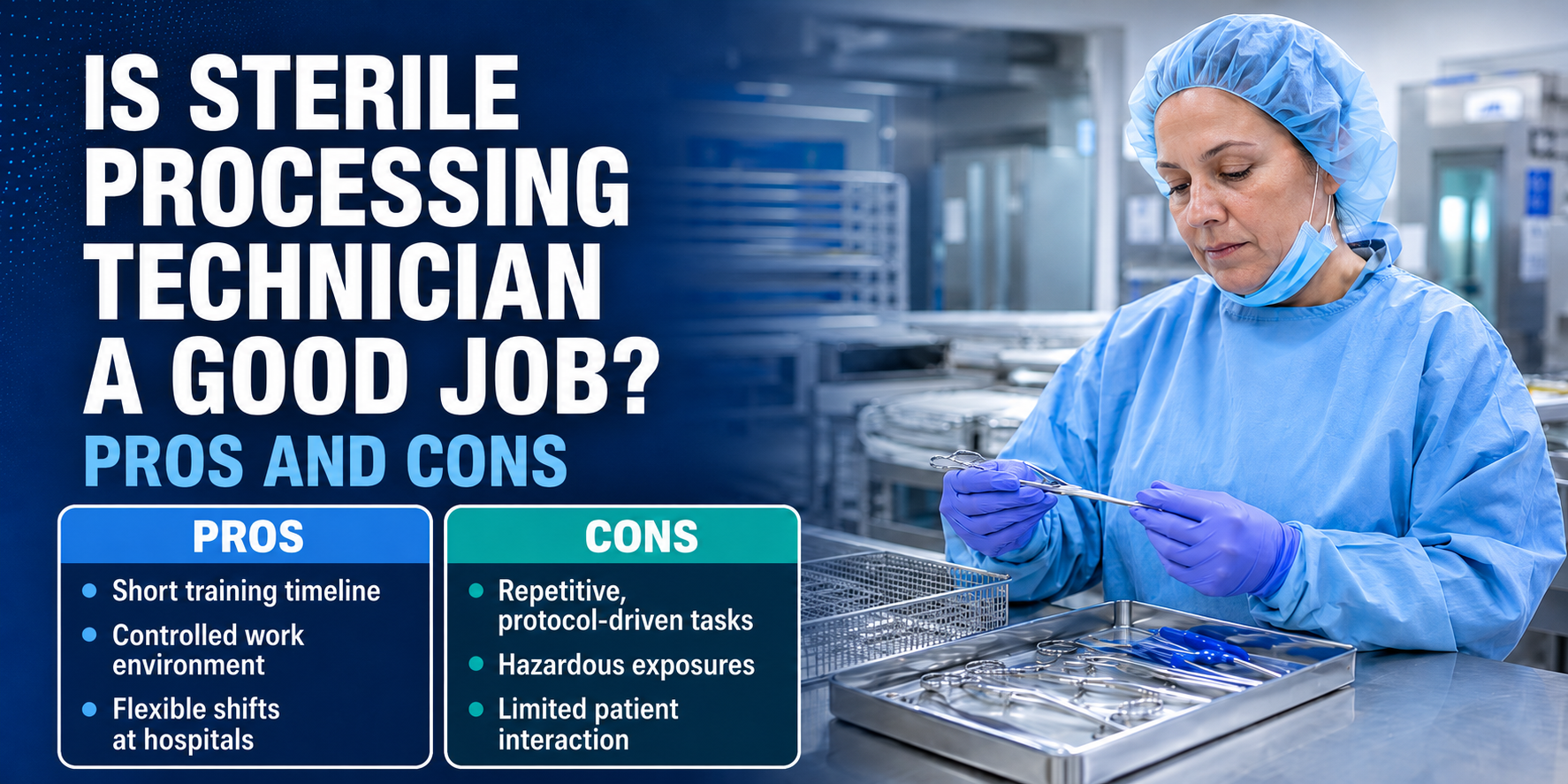
Sterile processing is one of the fastest ways into healthcare, and for the right person it is a stable, low-cost career with steady hospital demand. Training runs about three to four months, the national median pay is $47,700 a year, and the work happens in a department away from direct patient care. The honest catch is that full certification takes longer than passing the exam, since the main credential requires 400 hands-on hours after the written test, and only eight states legally require certification to work. Whether it is the right job for you comes down to how you feel about behind-the-scenes work, physical shifts, and a support role over bedside care.
Sterile Processing Bootcamp - Health Tech Academy
- Format: Online
- Length: about 16 weeks
- Tuition: $266 to start, $2,900 total
- Prepares you for the CRCST exam
Sterile Processing Career Diploma - Penn Foster
- Format: Online, self-paced
- CRCST exam fee included in tuition
Compare these and other online sterile processing classes on Dreambound to match a format and start date to your schedule.
Frequently Asked Questions
Is sterile processing technician a dead-end job?
No. Common next steps include lead technician, sterile processing supervisor, and central service manager, with supervisory roles often paying over $50,000 nationally. Many technicians also use the role as a bridge into surgical technologist or surgical first assist training, and some move into educator or infection-control positions.
Is it hard to pass the sterile processing exam?
The CRCST written exam is manageable with focused study, and most accredited programs are built specifically to prepare you for it. The harder part for many people is the 400 hours of hands-on experience required after the written exam, since that happens on the job within a six-month window rather than in the classroom.
What is the hardest part of sterile processing?
Most technicians point to the pressure of total accuracy, since a contaminated or incorrectly assembled tray can put a patient at risk. The physical load of standing for full shifts and moving heavy instrument trays is the other common answer, especially during high-volume surgical days.
How many years does it take to become a sterile processing technician?
It takes months, not years. Most programs run three to four months, and you can start applying for entry-level roles once you pass the written exam and earn provisional certification. Full CRCST certification then requires 400 hands-on hours within six months.
Is sterile processing the same as surgical technology?
No. Sterile processing technicians prepare and sterilize instruments in a department behind the scenes, while surgical technologists work inside the operating room during procedures, passing instruments to the surgeon and maintaining the sterile field. Surgical technologist training usually runs one to two years and earns a different credential.
Is sterile processing a stressful job?
It carries real but specific stress. The work demands total accuracy, and thin staffing during surgical surges adds pressure. The buffer is that there is no direct patient contact and no clinical decision-making, which keeps the emotional load lower than most bedside healthcare roles.
Deciding If Sterile Processing Is Your Path
For the right person, sterile processing is a fast, affordable route into healthcare with a clear path to a recognized credential. The part worth planning around is sequence: full certification depends on 400 post-exam hours, and whether certification is required at all depends on which of the eight states you work in. Get that order right, training, then exam, then hours, then the job, and the path stays straightforward.
Weigh sterile processing programs on Dreambound, match one to your timeline and start date, then plan your CRCST exam around your state's certification rules.