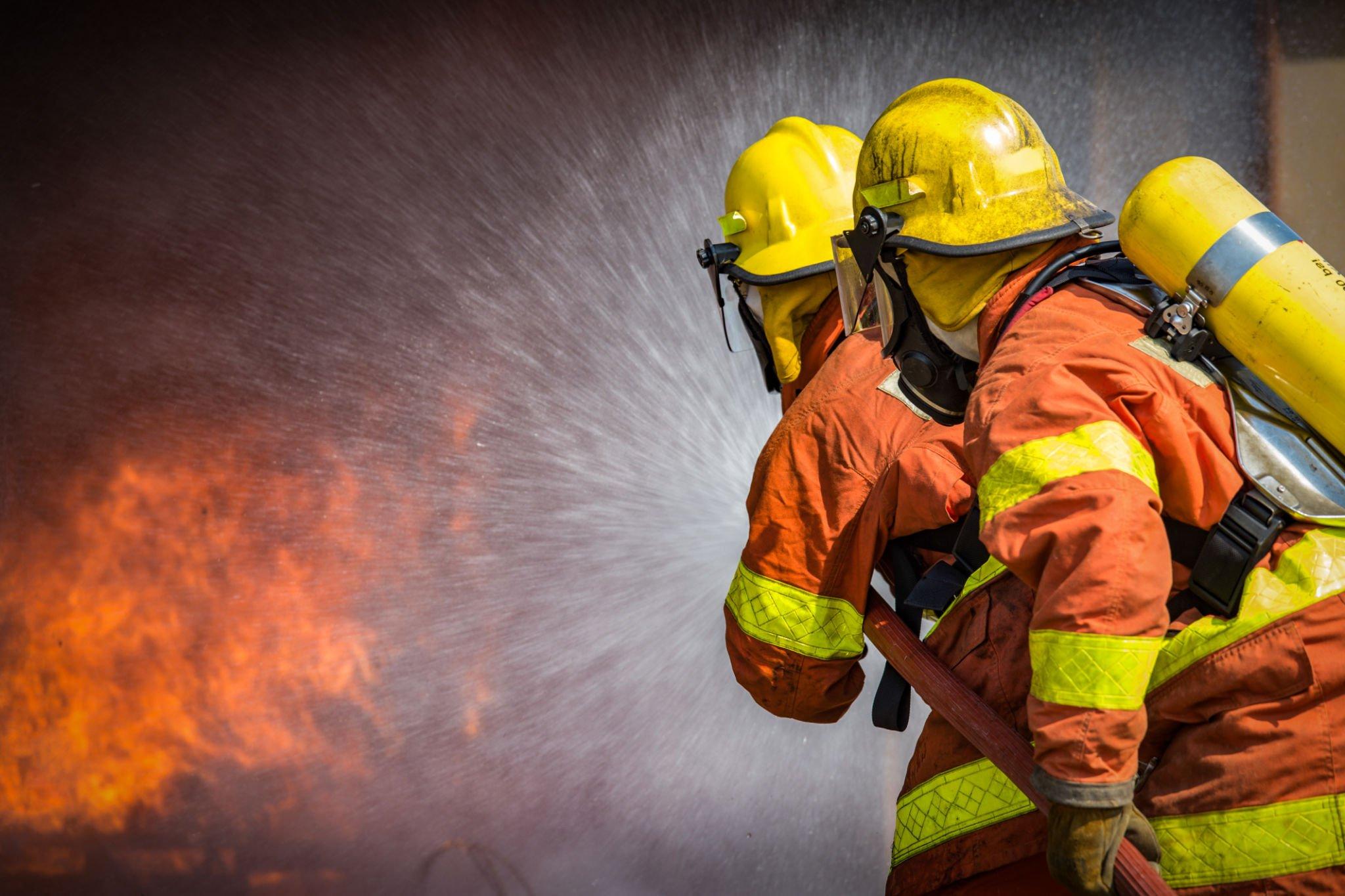
Key Points: A Firefighter Career in 2026
- A firefighter responds to medical emergencies, vehicle crashes, hazardous material incidents, rescues, and structure fires, often in the same shift.
- The median annual wage for firefighters was $59,530 in May 2024, with the top 10% earning more than $101,330.
- Firefighter jobs are projected to grow by 3% from 2024 to 2034, adding about 11,800 positions nationally.
- Most calls are not fires. In 2023, EMS and rescue accounted for 65.2% of fire department responses while fires made up 3.9%.
- The job carries real physical, mental, and long-term health risks, including elevated cancer rates that prompted a federal firefighter health registry.
- Hiring is competitive. Many departments receive hundreds of applicants for a handful of openings each cycle.
What Does a Firefighter Actually Do?
The job title only tells part of the story. A modern firefighter spends most of their working hours on medical calls, vehicle accidents, lift assists, hazmat responses, and public service runs. According to the U.S. Fire Administration, EMS and rescue calls made up 65.2% of all U.S. fire department responses in 2023, while actual fires accounted for just 3.9%. The remaining calls were good-intent runs, false alarms, and service requests.
That mix shapes the day-to-day reality of the job. Most departments require recruits to be cross-trained as Emergency Medical Technicians before they can run on a truck, and many require paramedic-level credentials within a few years of hire. The fire side of the work still matters, but it is no longer the bulk of what a firefighter does.
Typical responsibilities across a 24- or 48-hour shift include:
- Responding to medical emergencies and providing basic or advanced life support
- Suppressing structure, vehicle, and outdoor fires using hoses, pumps, and aerial apparatus
- Performing vehicle extrications, water rescues, and confined-space rescues
- Containing hazardous material spills and protecting nearby residents
- Conducting building inspections, hydrant checks, and code enforcement
- Running public education events at schools and community centers
- Maintaining trucks, gear, and station readiness between calls
- Training daily on new techniques, equipment, and incident command procedures
Firefighter Salary and Career Outlook
According to the U.S. Bureau of Labor Statistics, firefighters earned a median annual wage of $59,530 in May 2024. The lowest 10% of the workforce earned less than $34,490, and the highest 10% earned more than $101,330. Pay varies sharply by region, department size, union representation, and rank.
State data shows just how wide that gap can be. Washington led the country in firefighter pay with a median annual wage of $93,490, followed by New York at $88,380, New Jersey at $87,660, and California at $83,400. Departments in high-cost metros, departments with strong collective bargaining agreements, and departments that classify firefighters as paramedics tend to pay at the upper end of that range. Smaller and rural departments, particularly those that rely on combination or volunteer staffing, sit closer to the lower percentiles.
The federal outlook projects a 3% job growth from 2024 to 2034, which is about average for all occupations. The growth translates to roughly 11,800 added positions nationally over the decade. The number sounds modest, but openings in firefighting tend to come from retirements and turnover rather than new positions, so actual hiring activity is steady year over year.
If the salary range and the location data line up with your goals, you can compare firefighter and EMT training programs by cost, schedule, and format on Dreambound to see what is available in your state.
Pros of Being a Firefighter
Strong job security. Public-safety positions are funded through municipal budgets and rarely face layoffs the way private-sector jobs do. Once you make it through probation, the role is one of the most stable in the labor market.
Salary plus pension. Beyond the median wage, most career firefighter positions come with defined-benefit pensions, employer-paid health insurance, paid leave, and overtime opportunities that can add tens of thousands of dollars to take-home pay each year. In high-paying states, total compensation often exceeds the headline salary by a wide margin.
Schedule flexibility. The 24/48 or 48/96 shift pattern means firefighters typically work fewer days per month than a five-day office worker. Many use their off days for second jobs, family time, school, or side businesses. The trade-off is that the on-shift days are long and unpredictable.
Real public service. Firefighters do work that visibly helps people on the worst day of their lives. Pulling someone out of a wrecked car or restarting a heart in a stranger's living room is the kind of work that builds a deep sense of purpose, and most firefighters cite it as the reason they stay.
Tight crew bonds. Living in a station with the same people for 24 hours at a time creates a working relationship that does not exist in most jobs. The crew-based culture is one of the things firefighters miss most after retirement.
A path to specialization. Firefighting opens doors to paramedicine, hazmat technician work, technical rescue, fire investigation, wildland operations, and fire marshal roles. Most departments pay extra for each certification, and some cover the training cost entirely.
Cons of Being a Firefighter
Real physical risk. The work is dangerous. The U.S. Fire Administration tracked 81 firefighter fatalities in the United States in 2025. Federal data from the annual report on firefighter fatalities shows that 72 firefighters died while on duty in 2024, with 26 deaths tied to fire-scene operations and 16 tied to non-fire scenes. Injuries from falls, burns, smoke, equipment, and motor-vehicle crashes are part of the job for nearly every firefighter at some point in a career.
Long-term health and cancer risk. Firefighters face higher rates of certain cancers than the general population due to repeated exposure to combustion byproducts, diesel exhaust, and contaminated gear. The CDC and NIOSH launched the National Firefighter Registry for Cancer to study these occupational risk factors at scale, the first federal effort of its size focused on the firefighting workforce.
Mental health load. Firefighters see traumatic scenes regularly: pediatric medical calls, fatal accidents, suicides, fires with civilian fatalities. The cumulative weight contributes to higher rates of PTSD, depression, anxiety, and substance use compared to the general population. Departments are expanding peer-support programs and behavioral health resources, but the exposure does not go away.
Disrupted sleep and family life. Working 24-hour shifts that include night calls is hard on the body, and many firefighters report sleep deprivation as one of the most difficult parts of the career. Holidays, birthdays, and weekends on the schedule are not negotiable. Spouses and children of firefighters often describe the shift schedule as the hardest non-physical part of the job.
A brutal hiring process. Most fire department positions attract hundreds or thousands of applicants for a handful of openings. The full process, from written test to physical agility test to oral board to background check to medical and psychological evaluation to academy, can stretch over a year or more. Many strong candidates apply to multiple departments before being hired, and some apply for years.
Career-long fitness demands. Unlike most jobs, the physical standard does not get easier with age. Firefighters are expected to perform the same job at 50 as they did at 25, often with the same equipment loads. Fitness, recovery, and injury prevention become part of the job itself.
How Long It Takes to Become a Firefighter
The path from deciding to apply to running on a truck typically takes one to three years, though some candidates land a position faster and many take longer. The major time blocks are:
- Prerequisites (3 to 12 months): Most departments require a high school diploma or equivalent, a valid driver's license, and EMT certification before applying. EMT courses generally run 8 to 16 weeks.
- Application and testing (3 to 12 months): Written exam, physical ability test (often the Candidate Physical Ability Test), oral board interview, background check, and medical and psychological screening.
- Fire academy (3 to 6 months): A full-time recruit academy that combines classroom instruction, live-fire training, hose evolutions, ladder work, EMS practice, and incident command basics.
- Probation (12 months): A new firefighter typically serves a one-year probationary period after academy graduation, during which they continue training and are evaluated on the job.
A community college fire science degree or paramedic credential can shorten parts of this path and can give applicants an advantage in competitive hiring pools, but neither is required to apply at most departments. Dreambound is a free platform that helps students compare accredited EMT, paramedic, and fire science classes across the United States so you can plan the prerequisites that fit your state and budget.
The Evolving Role of a Modern Firefighter
Two shifts are reshaping the profession faster than most other public-safety roles.
The first is wildfire. The frequency and intensity of large wildfires has increased across the western United States, and structural departments are increasingly called to support wildland incidents through mutual aid. Recent peer-reviewed research projects that fire activity in parts of the Pacific Northwest could roughly double in the coming decades under continued warming. For firefighters, that means more wildland-urban interface training, longer deployments away from home, and a broader skill set that blends structural and wildland tactics.
The second is technology. Departments are adopting drones for incident size-up and search operations, thermal imaging has become standard interior gear, and artificial intelligence tools are starting to support dispatch triage, training simulations, and data-driven station planning. The role still requires the same physical skills it always has, but the tools around the firefighter are changing year over year.
Who Is Firefighting a Good Career For?
Firefighting tends to be the right fit if:
- You want stable public-sector employment with strong benefits and a defined-benefit pension
- You can pass and maintain a demanding physical standard for the length of your career
- You handle stress, sleep disruption, and unpredictable hours without burning out
- You are comfortable with regular exposure to medical emergencies and traumatic scenes
- You want work that visibly serves your community and does not happen behind a desk
- You are willing to commit a year or more to a competitive hiring process
Firefighting may not be the right fit if:
- You need predictable hours and weekends off for family or other commitments
- You prefer a low-stress, low-physical-risk work environment
- You are unwilling or medically unable to maintain peak fitness over decades
- You are uncomfortable with the long-term health risks tied to fire and chemical exposure
- You need to start earning a full salary within a few months rather than over a year or more
🎓 FEATURED PROGRAM >AA Fire Science | Waldorf University (Online)
If the trade-offs work for your situation, the next step is usually getting EMT-certified, since that is the prerequisite most departments check first. Browse EMT, fire science, and firefighter training programs by cost, length, and location on Dreambound to see what is available in your state.