How to Become a Sterile Processing Technician in High School?
See if you qualify for Sterile Processing Technician programs
Answer a few questions in 2 minutes. Free, no commitment.
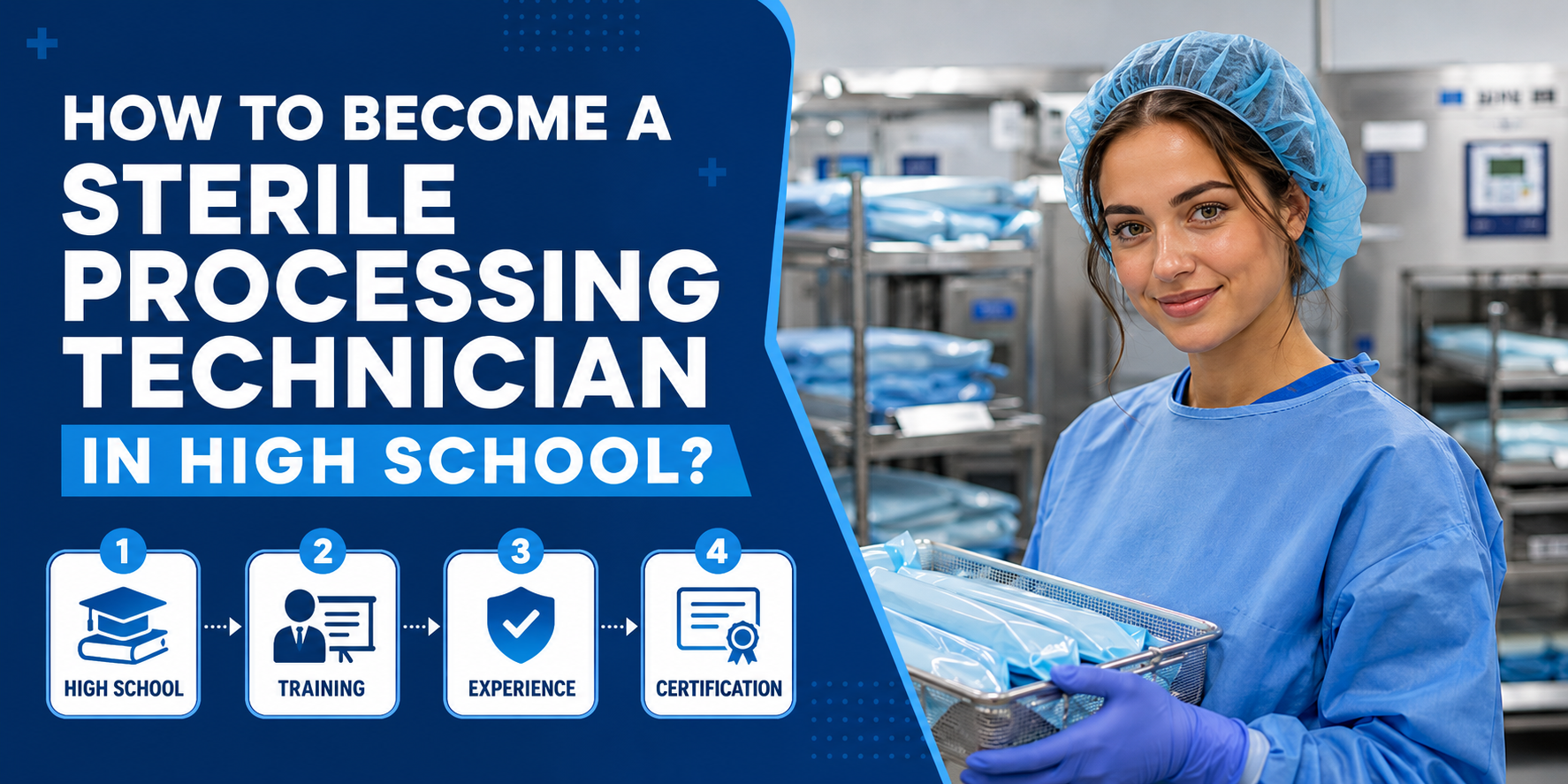
Sterile processing is one of the few healthcare careers you can genuinely begin before you graduate high school. Many districts run the training through a free Career and Technical Education (CTE) program, and students without one nearby can start online instead. The steps are the same either way: build a science foundation, complete classroom and clinical training, and sit the CRCST or CSPDT certification exam. The catch worth knowing early is that you pass the exam for provisional status in school, but full certification waits on your diploma or GED. For a field with a national median around $47,700 a year, that is a fast, low-cost way into healthcare.
What Sterile Processing Training Costs
For a high schooler, the cheapest path is usually free. A district CTE program carries no tuition, and some hospitals will even hire and train new technicians at no cost. That makes sterile processing one of the rare healthcare credentials you can earn without debt.
If your district has no CTE track, private online programs generally run about $2,900 to $4,000, sometimes with the exam fee folded in, and community colleges land in between. Price out the cheapest and fastest sterile processing programs to see where each option falls.
If you need to study around a school schedule, see whether online sterile processing classes with local clinical placement fit your situation.
Sterile Processing Technician Salary
Sterile processing pays better than most jobs a new graduate can step into. The national median is $47,700 a year, about $22.93 an hour, according to May 2025 data, and it climbs with experience, shift differentials, and certification. For something you can start in high school, that is a strong return with almost no student debt.
If you go looking for the numbers yourself, note a quirk: the Bureau of Labor Statistics files sterile processing under the broader title of medical equipment preparers, where hiring is projected to rise around 7% this decade. Openings tend to outpace that figure, since hospitals constantly cycle through instrument trays and need trained staff to keep up.
Frequently Asked Questions
What qualifications do you need for sterile processing?
You need a high school diploma or GED for full certification, plus completion of a sterile processing program and a passing score on the CRCST or CSPDT exam. Strong science coursework helps, but you do not need a college degree to start.
What are the duties of a sterile processing technician?
The core duties are decontaminating used instruments, inspecting them for damage, assembling and packaging surgical trays, running sterilization equipment, and documenting every set. Accuracy is the whole job, since a single missed step can put a patient at risk.
What is the hardest part of sterile processing?
Most technicians point to the pressure of total accuracy under time constraints, especially during high-volume surgical days. The physical side, long hours on your feet and lifting heavy instrument trays, is the other common answer.
Can a high schooler become a sterile processing technician?
Yes. The coursework, clinical training, and even the certification exam are all open to you in high school, with the exam granting provisional status. Full certification then activates once you have your diploma or GED.
Is sterile processing the same as being a surgical technologist?
No. Sterile processing technicians prepare and sterilize instruments away from the operating room, while surgical technologists work in the room during procedures. The two have different training and different credentials, though sterile processing is a common step into surgical technology later.
Starting a Sterile Processing Career in High School
The biggest advantage of starting in high school is cost and time: a free CTE program plus early certification can put you in a paying healthcare job within months of graduation, with no degree required. The one detail to plan around is the diploma requirement, so aim to sit the exam close to when you graduate, provisional first, full certification the moment your diploma lands.
The single best move right now is to ask your guidance counselor whether a CTE sterile processing track exists in your district. If it does not, the online programs above are open to you today on Dreambound.